
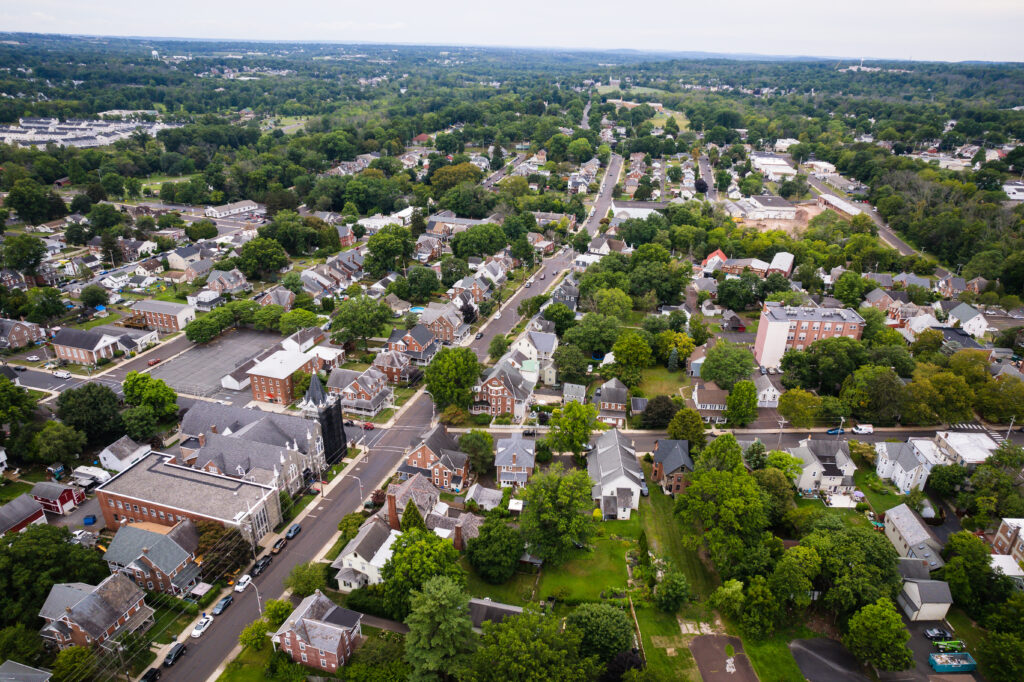
A homeowner in Yardley and one in Chalfont can type the same words into Google and see different results. That one fact explains most of what goes wrong with marketing in this county.
Here is how to market your business in Bucks County without paying for things that don’t help. Decide which towns you want, make sure Google has your details right, give those towns pages worth reading, collect reviews steadily, and count what comes in. Everything else is optional, and most of it can wait.
How to market your business in Bucks County: pick your towns first
Bucks County behaves like a group of separate markets. The U.S. Census Bureau’s QuickFacts estimates 647,828 residents as of July 1, 2025, in 249,187 households. Doylestown is not Bensalem, and Newtown is a good drive from Quakertown.
Google builds that into its results. Its guidance on local ranking names relevance, distance and prominence, and describes distance as how far each business is from the person searching. You don’t get to opt out of geography.
So the first decision is not a platform. It’s a list. Picture a painting contractor in Quakertown who will happily take a whole-house exterior in Richlandtown but won’t send a crew to Bensalem for a single bedroom. That one preference decides which pages to write, which ads to run and which reviews matter most. If you can’t name your five best towns, you’ll end up paying to be seen by people you’ll never serve.
Some owners disagree and want the whole county on the list. We’d still start with a few towns and widen from there, because a smaller list gives you something you can check.
Get your Google listing right
When someone searches “plumber in Warrington” or “family lawyer in Newtown PA,” the map results usually come first. Those come from Google Business Profiles.
Whitespark’s 2026 Local Search Ranking Factors report surveyed 47 local search practitioners. The two factors they rated highest for map results were the primary category on the profile and how close the business address is to the searcher. That’s expert opinion, not a statement from Google, though it fits what Google says. You can’t easily move your address. You can pick the right category.
Google also says businesses with complete and accurate information are more likely to appear, and that there is no way to request or pay for a better local ranking. So open your profile and read it like a stranger would. Check the category, name, address, phone number, hours and services, and make them match your website and the directories. If the listing still isn’t showing, we wrote up why a Google Business Profile isn’t showing up.
Give each town and service a page worth reading
The map favors nearby businesses. The regular results below it give you a chance to be found in towns where you have no address, and that part is your website.
In the Whitespark survey, the two top-rated factors for those regular local results were a dedicated page for each service and content relevant to the city or neighborhood. A single home page that says you serve “all of Bucks County” offers neither.
Take a pool company based in Newtown that wants more work in Richboro. A page on pool openings in Richboro, with photos from jobs done there and a plain description of what’s included, answers what a Richboro homeowner is asking. A page that only swaps the town name tells the reader nothing, and a reader can tell. Adding a town to a page doesn’t make you visible there. Start with the two or three towns that matter most, and write each one as if you were explaining the work to a neighbor. We’ve gone further into how small businesses can use location pages.
Reviews and social media are where neighbors check you
People here often ask a neighbor first. Then they check. In BrightLocal’s Local Consumer Review Survey 2026, a survey of about a thousand U.S. adults, 97% said they read reviews for local businesses, and 74% look for ones written in the last three months. That’s what people say they do nationally, not a count of Bucks County customers. It still suggests a steady trickle is worth more than one old burst. Google adds that more reviews and positive ratings can help local ranking.
The dependable method is to ask every satisfied customer soon after the job. Google’s tips for getting more reviews say you can share a link or a QR code, and that offering discounts or free services in exchange for reviews is prohibited. Check Google’s current policy before you write your request, since it’s the one that decides what is allowed. Let customers use their own words. A review that mentions the job in Yardley is more convincing when nobody scripted it. Then reply.
Social media belongs in this section for a reason. The Whitespark panel placed social posting factors far down the list for map results, so we wouldn’t post to move your Google position. Post for the person checking you out. BrightLocal reports that Google, Facebook and AI tools such as ChatGPT are the most commonly used sources for local recommendations. A neighbor names your landscaping company in a local Facebook group, and someone clicks through. They should find a recent patio job in Buckingham, not a holiday greeting from two years ago.
Ads, and counting what comes in
Google’s Ads guidance says ads can be targeted to countries, areas within a country, or a radius around a location. That lets you pay for clicks only from the towns you chose. Once the campaign and the page are ready, ads can also bring inquiries sooner than search visibility, which usually takes longer to build.
The expensive mistake is spending before the page is ready. Imagine an ad for water heater replacement that lands on a general home page, where the visitor has to hunt for what they came for. Does the page explain the service? Does it show you work in that town? Is the phone number easy to find, and who answers it? Those are the questions we start with in our paid ads management work.
You should be able to say roughly where your inquiries come from. Call and form tracking can show that where the tools allow it, and asking callers how they found you fills in much of the rest. Which towns do the calls come from? Which pages do people visit before they get in touch?
Only you can say which inquiries became customers, and that matters most. If the phone rings more but the calls are for work you don’t do, the marketing hasn’t done its job, whatever the traffic report says.
Nobody outside Google controls where it places a business, and no one can honestly promise a position or a number of calls by a given date. The surveys above describe people in general, not your customers. How long it takes depends on your starting point, your competition and how much work gets done. Your part is photos of your jobs, news of services you’ve added or dropped, and feedback on which inquiries were any good.
Start with a list of your towns
This week, write down the town for each of your last ten customers and mark the three best jobs. It takes about fifteen minutes and costs nothing. The towns that repeat are where your first pages, your reviews and any ad budget should go.
Send us the list, along with what you’ve tried so far. We’ll look at what’s in place and tell you what we’d do first, and why. Our local marketing work begins the same way. We have offices in Montgomeryville, Warrington and Allentown, and we work with small businesses across Bucks County. Your first consultation is free. Send us a message or call (215) 368-8900.