
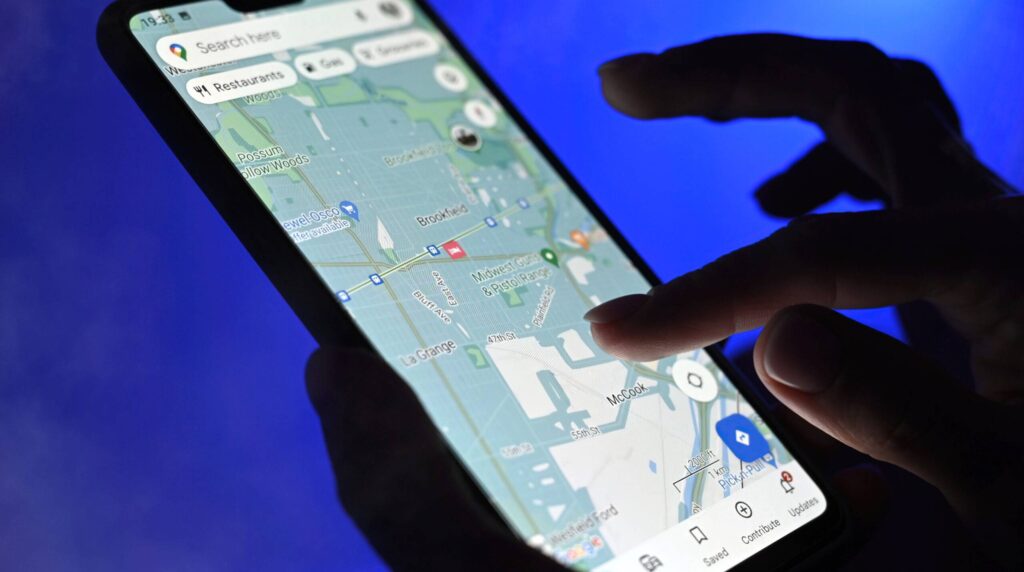
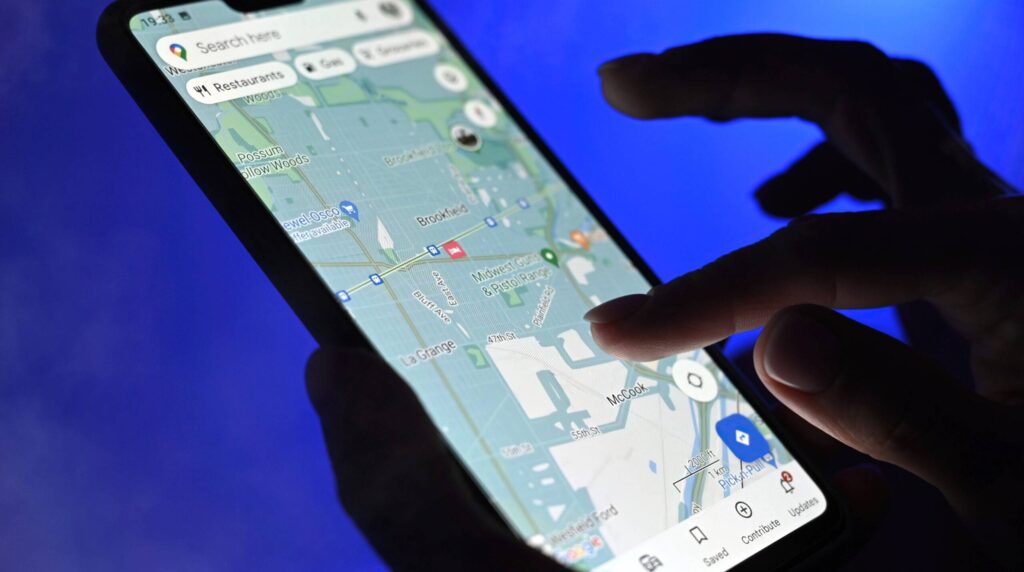
Search for your own trade and your own town, the way a customer would. A map comes up with three businesses under it. You know two of them. The third looks smaller than you. Your business is further down the page, or not on it.
If you’ve typed “how do I get into the Google 3 pack” after a moment like that, here is the short answer. You can’t apply, and you can’t pay. Google says so on its own help page. What you can do is match the searches you want, be accurate about where you are, and earn the reviews and links that make a business known. It’s slow, ordinary work, and it goes best in order.
What the 3 pack is
When someone searches for a service with a place attached, or a phrase like “plumber near me,” Google often shows a map with three listings under it, above the regular website results. People call it the 3 pack, the local pack or the map pack. Each listing shows a name, a star rating, hours, and buttons to call or get directions.
Those listings come from Google Business Profiles, not from websites. So a business with a handsome website can be missing from the map, and one with a plain site can sit right in it.
The three also change with the words used and with where the searcher is standing. Someone in Warrington and someone in Lansdale can type the same thing and see different businesses.
How do I get into the Google 3 pack? Three factors
Google’s help page, Tips to improve your local ranking on Google, names relevance, distance and prominence. The same page says “there’s no way to request or pay for a better local ranking on Google.” Nobody outside Google knows how the three are weighed against each other, so be wary of anyone who claims to.
Relevance is “how well a Business Profile matches what someone is searching for.” A roofer won’t show up for a landscaping search. A roofer who never mentions flat roofs may not show up for a flat roof search either.
Picture a fence company in Newtown that earns most of its money installing new vinyl and aluminum fences. Its profile talks only about repairs. Google has little reason to show it to someone shopping for a new fence. Which work do you most want calls for? Does your profile say so, in the words a customer would type?
Distance is how far each business is from the person searching. You have the least say here, and we’d stop trying to fight it. A company across the county starts behind for that search, however good its work. What you can do is be accurate. The address should match your website, and a service area should list only the towns you really work in.
Prominence is “how well-known a business is.” Google ties it to information like how many websites link to your business and how many reviews you have. This is where steady work shows up most over the months, which is why most of the steps below feed it.
Five steps, in order
None of these is hard. The hard part is doing all five and keeping them up while you run a business.
Step 1: Fix your Google Business Profile
Google says “businesses with complete and accurate info are more likely to show up in local search results.” Claim and verify the profile. Choose the primary category for the work that pays the bills, not the work you’d like to be known for, and add secondary categories for related services. Fill in the address or service area, phone, website, hours and services, then add photos of real jobs.
Use your real business name. Google’s guidelines for representing your business say unnecessary information in the name isn’t permitted and could get the profile suspended. If the sign says “Smith Plumbing,” the profile shouldn’t say “Smith Plumbing Best Plumber in Philadelphia.”
Our article on using keywords in your profile covers the description. If you can’t find the business on the map even by name, that’s a different problem, and why a profile isn’t showing up deals with it.
Step 2: Earn reviews and answer them
Reviews count twice. Google says they can help your ranking, and they’re what a customer reads before choosing. BrightLocal’s 2026 Local Consumer Review Survey questioned 1,002 US adults. It found 47% won’t use a business with fewer than 20 reviews, and 89% expect a response to their reviews. That’s a consumer survey, not a ranking rule. It does tell you what people look at when three roofers sit side by side.
Ask soon after the job, while the customer is still pleased, and send a direct link so it takes a minute. Reply to every review, the critical ones included. Don’t buy reviews or write your own. It’s dishonest, and it tends to show.
Step 3: Make the website agree with the profile
Google and the customer both go to your website to check the profile. Service pages should name the service and the place in plain language, like “HVAC repair in Warminster,” and load quickly on a phone. If you serve several towns, a page for each one that matters gives people something local to read. We explain how in making local SEO landing pages. A town page won’t put you on the map for a town an hour away, and we wouldn’t tell you it will.
Step 4: Get listed and linked
A citation is a listing of your business on another site, like Yelp, the Better Business Bureau, a trade directory or the chamber of commerce. A backlink is a link from another site to yours. Keep the name, address and phone number identical everywhere. We often find a business that moved or changed its number, with three old versions still out there. Whether or not that confuses Google, it confuses customers. For links, think local: suppliers, partners, a team you sponsor, a news site that covered a job.
Step 5: Keep it current and read the reports
A profile that was right two years ago may not be right now. Update hours, services and photos when they change. We can’t point to verified research showing that posting on a set schedule moves a business up, so we treat updates as a way to keep the profile useful to customers.
Your profile reports how many people called, asked for directions or clicked to your website. Over a few months that tells you more than searching from your own office, because what you see there is shaped by where you sit. Then ask what the report can’t answer. Which of those calls turned into jobs you wanted?
What nobody controls, and what we need from you
Nobody can promise you a spot in the three. Google decides what to show, competitors are working on their own profiles, and your distance from the searcher is what it is. How long improvement takes depends on your starting point and how crowded your trade is locally.
This steady work is the core of our local SEO service. Some of it needs you. We can’t photograph a job we weren’t at, and we won’t know about a new service or new hours unless someone tells us.
Start with your profile name
This week, open your Google Business Profile and compare the name and primary category with your truck door or storefront sign. Fix any mismatch. It takes about ten minutes and costs nothing.
Then send us the profile link and tell us which searches you want to win. We’ll look at your profile, your website and who shows up for those searches, and tell you what we’d change first and why. Your first consultation is free. You can get in touch here, or call (215) 368-8900.