
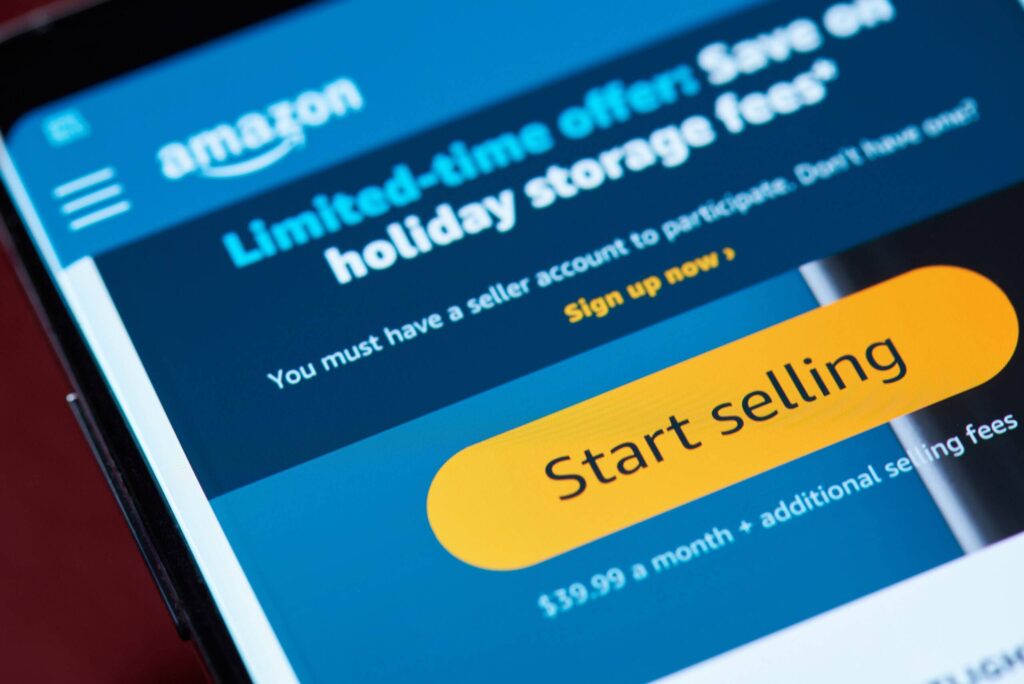
Yes, small businesses can sell on Amazon — and many do successfully. But the landscape in 2025 looks significantly different than it did even two or three years ago. Rising seller fees, increasing competition from overseas sellers, and Amazon’s own expanding private label products have made the platform more complex and less automatically profitable than it once was. Before jumping in, it pays to understand what you’re getting into.
How Small Businesses Can Sell on Amazon
Amazon offers two primary selling structures: Fulfilled by Merchant (FBM) and Fulfilled by Amazon (FBA).
With FBM, you list products on Amazon but handle storage and shipping yourself. You keep more control and avoid Amazon’s warehouse fees, but you miss out on Prime eligibility and Amazon’s logistics network, which can affect your visibility in search results.
With FBA, you ship your inventory to Amazon’s fulfillment centers and they handle storage, packing, and shipping. Your products become Prime-eligible, which dramatically improves conversion rates. The trade-off is fees — FBA fees increased significantly in 2023 and 2024, and storage fees for slow-moving inventory can erode margins quickly.
Most businesses with serious volume use Amazon’s Professional plan at $39.99/month, which removes the per-item fee and unlocks additional selling tools.
The Real Costs of Selling on Amazon
Amazon isn’t a free channel. Before calculating your margins, account for all the fees involved:
- Referral fees — Amazon takes a percentage of every sale, typically 8–15% depending on the product category.
- FBA fees — Per-unit pick, pack, and ship fees based on size and weight. These have increased substantially in recent years.
- Storage fees — Monthly fees for inventory stored in Amazon warehouses. Long-term storage fees apply to items sitting for more than 365 days.
- Advertising costs — Amazon’s marketplace is increasingly pay-to-play. Without Sponsored Product ads, new listings rarely appear in search results.
- Returns processing — Amazon’s return policy is generous to buyers, and return costs come out of seller margins.
After all fees, most small business sellers on Amazon net 10–30% margins, depending on the product. If your margins are already thin, Amazon may eat them entirely.
The Competition Problem
Amazon’s marketplace has become extraordinarily competitive, particularly since 2020. Many product categories are now dominated by Chinese manufacturers selling directly to consumers — often at prices that established small businesses simply can’t match without losing money.
Additionally, Amazon has expanded its own private label brands under names like Amazon Basics and Amazon Essentials, directly competing with third-party sellers in popular categories. The businesses that succeed on Amazon today tend to have differentiated products, strong brands, and operate in niche categories where price competition is less brutal.
Where Small Businesses Can Succeed on Amazon
The sellers who do well on Amazon in the current environment tend to share a few characteristics:
- Unique or proprietary products — If you manufacture something or sell something not easily replicated by overseas competitors, Amazon can work very well for you.
- Strong brand identity — Sellers enrolled in Amazon Brand Registry can protect their listings and access enhanced content (A+ pages).
- High-margin products — If your product has 50%+ gross margins before Amazon fees, you have room to absorb platform costs and still profit.
- Niche categories — Very specialized products with limited competition are far better positioned than mass-market items.
Should You Prioritize Amazon or Your Own Website?
Amazon offers immediate access to a massive audience — over 300 million active customer accounts globally. But every sale on Amazon is Amazon’s customer, not yours. You can’t email them, remarket to them, or build a long-term relationship.
Your own e-commerce website — even with less initial traffic — builds an asset you own. Every customer who buys from you directly becomes part of your audience. You can offer loyalty programs, send promotions, and develop long-term customer relationships that compound over time.
Many successful small businesses use both: Amazon for product discovery and volume, and their own website for relationship-building and higher-margin direct sales. The key is not being entirely dependent on Amazon’s platform, fees, and policies — which can and do change.
The Verdict
Small businesses can absolutely sell on Amazon and build profitable businesses there. But it’s not passive income, and it’s not without risk. The businesses that succeed treat it like the competitive marketplace it is — with a clear product strategy, a realistic understanding of their costs, and a plan that doesn’t put all their eggs in one basket.
If you’re thinking about expanding your business’s online presence — whether through Amazon, your own website, or both — RedKnight can help you build a digital strategy that makes sense for your products, your market, and your goals. Get in touch for a free conversation.